Setting up the SurfBouncer Personal VPN Flash Drive.

Setting up the SurfBouncer Personal VPN Flash Drive.

<This is a one-time setup>

Day-to-day usage of the flash drive is as easy as plugging in the stick and double clicking on the '.vmx' file.

Make sure you have loaded the VMware player on the computer that you wish to run the virtual VPN appliance from.

Look for the '.vmx' file in the flash drive directory and double click on it.

This will launch the VMware player and the SurfBouncer personal VPN image.

Launch the flash drive personal vpn

Note: The file may read surfbouncer.vmx, ubuntu.vmx, or u910.vmx.

VMware appliance startup

If this is the first time you have launched the image, a window may appear asking how you wish to treat the image. Pick 'I copied it' and hit 'OK' (you will only receive this message the first time you launch it).

first time vpn virtual machine launch

VMware player will start to load. Once VMware player is loaded, the Uubuntu operating system will start to load.

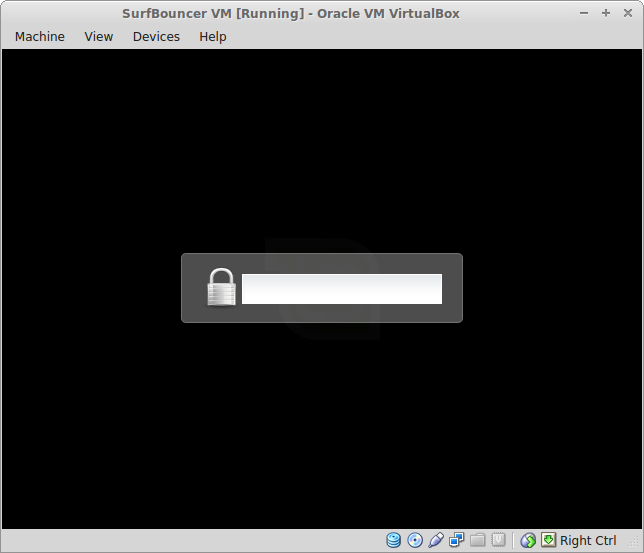
The operating system will ask you to log in. The default user name is 'user' and the default password is 'surfbouncer'. You can change these to whatever you wish, after the operating system loads. Click on User to log in. (Only a single click is required.)

Flash Drive VPN

Log into the Flash Drive personal VPN

Click on the 'Devices' tab and then select 'Network Adapter'. Make sure NAT' is selected.

Personal VPN client

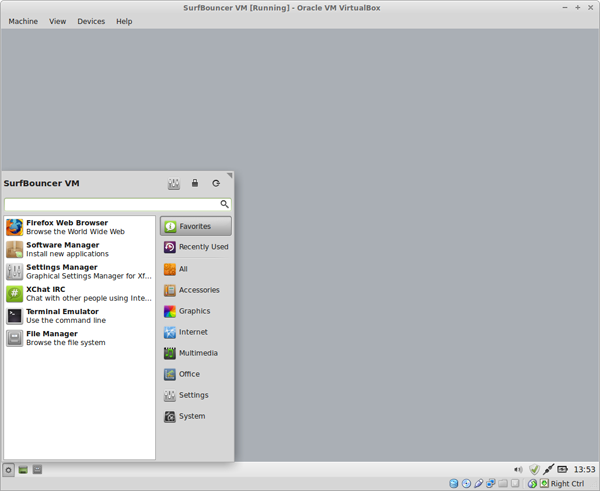
The image below shows the OS loaded. The arrows show the icons that launch the Personal VPN and Firefox.

Personal VPN Clients

Using OpenVPN Connection Manager:

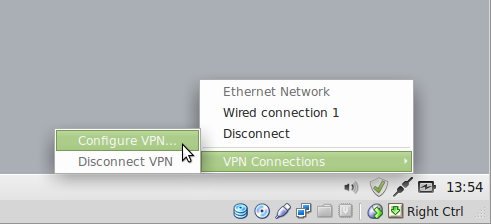
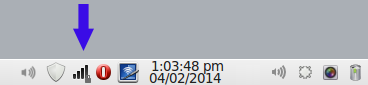
Click on the icon in the upper right hand corner of the screen.

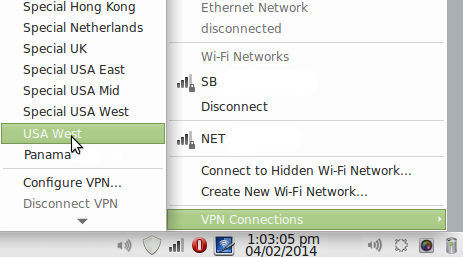
Click on 'VPN Connections'.

Click on 'Configure VPN'.

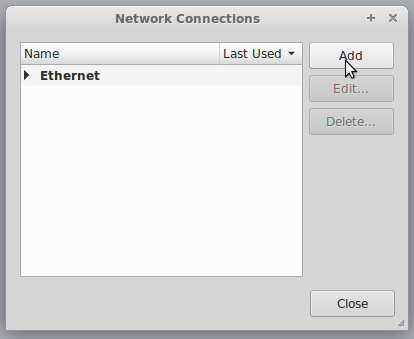
Make sure the VPN tab is selected.

Click on the first entry.

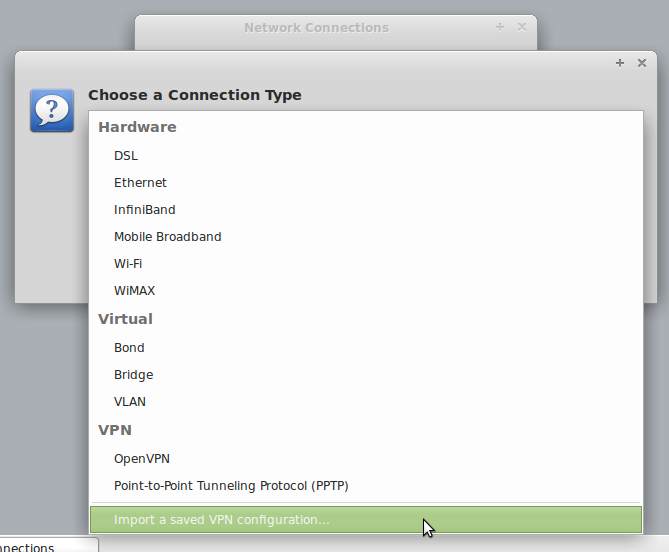
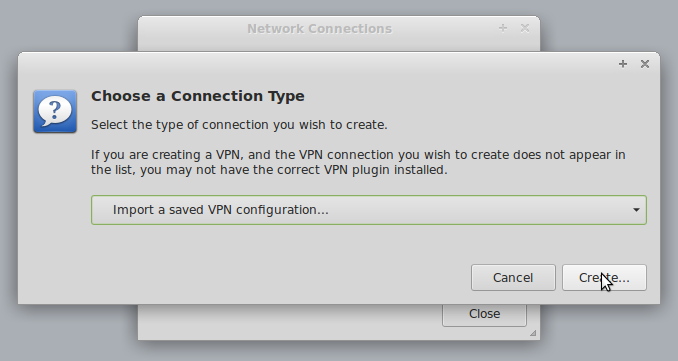
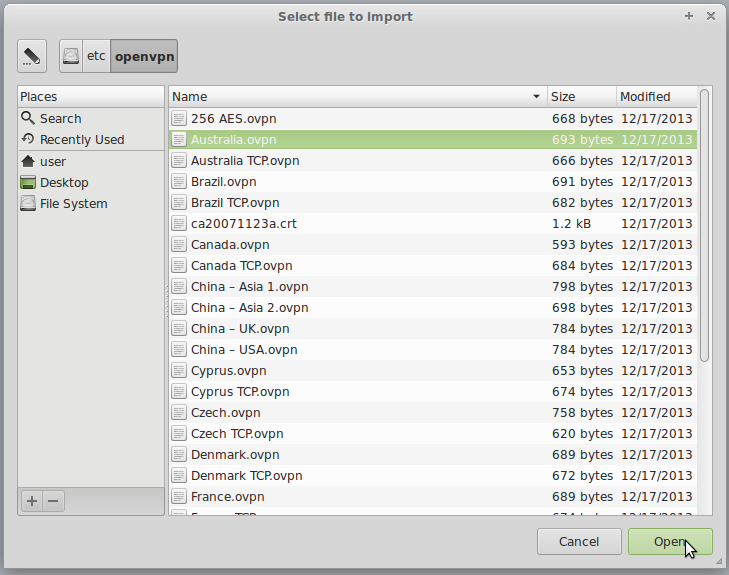
Configure  OpenVPN on Ubuntu

Click on 'edit'.

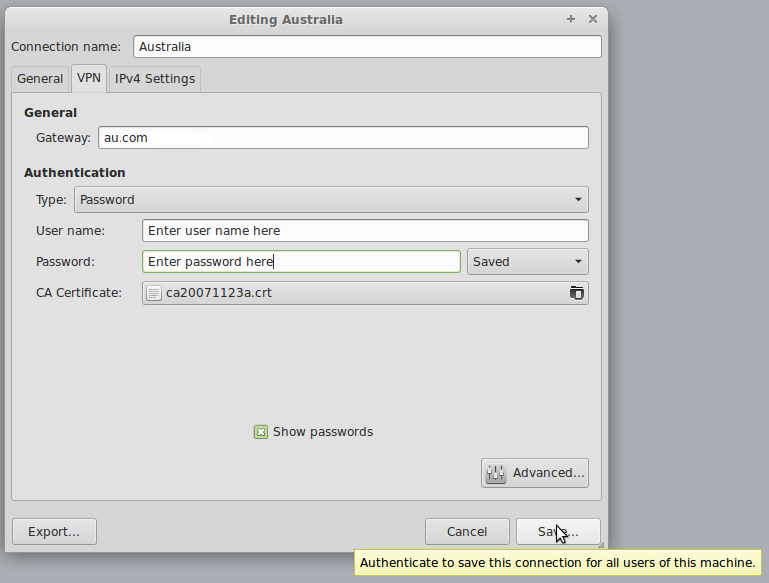
Ubuntu OpenVPN settings

Enter your user name.

Click 'Apply'.

Repeat the above steps for the other 3 connection options.

Exit out of the Network Connections window.


To connect to the VPN, click on the icon.

Click on 'VPN Connections'.

Click on the connection you wish to log into.

OpenVPN Connection Manager

A login box will appear.

Enter your password.

Check the 'Remember password for this session' box.

If you want to save the password so you don't have to enter it when you log in, check the 'Save password in keyring' box. Be sure to type it in correctly as it is saving and will not ask you for it again.

Click 'OK'.

Ubuntu VPN password

When you are connected, the icon will change to show a lock.

VPN service connected


Launch Firefox. From there, you can use the browser in any way you wish, just as you would any other browser. You are now on the Personal VPN network and unblocking web sites.

Flash Drive VPN in use

For other functions such as Skype and email, the screen shot below shows the result of clicking on 'Applications' and then 'Internet'.

Unblock Skype and VOIP

When you are finished with your session, you have the option to save the image so that you can continue exactly where you left off (you have to log in to the VPN again before proceeding) <or> you can shut down the machine just as you would shut down your computer.

Choosing to save the image will take about a minute to complete. This option is slower to close but will open almost immediately when re-launched. Shutting down the machine will result in a very fast shutdown. However, startup will require a full boot cycle. The choice is yours.

Choose 'Exit' to save the image to continue where you left off.

Saving the virtual flash drive image

<OR>

Shut down Flash Drive vpn

Choose 'User' and 'Shut Down' to shut down the Virtual Machine.


Trade names used above are the respective trademarks of their owners.


Unblock UAE   |   Unblock Saudi Arabia   |   Unblock Oman   |   Unblock Qatar   |   Unblock China   |   Unblock Iran   |   Unblock Kuwait   |   Unblock Bahrain   |   Unblock Belize


©2006-2010 SurfBouncer.com